News
EET 2.0 – Current Status as of 13 August 2026: Who Will Be Affected and What Will Be Recorded
· 8 min read
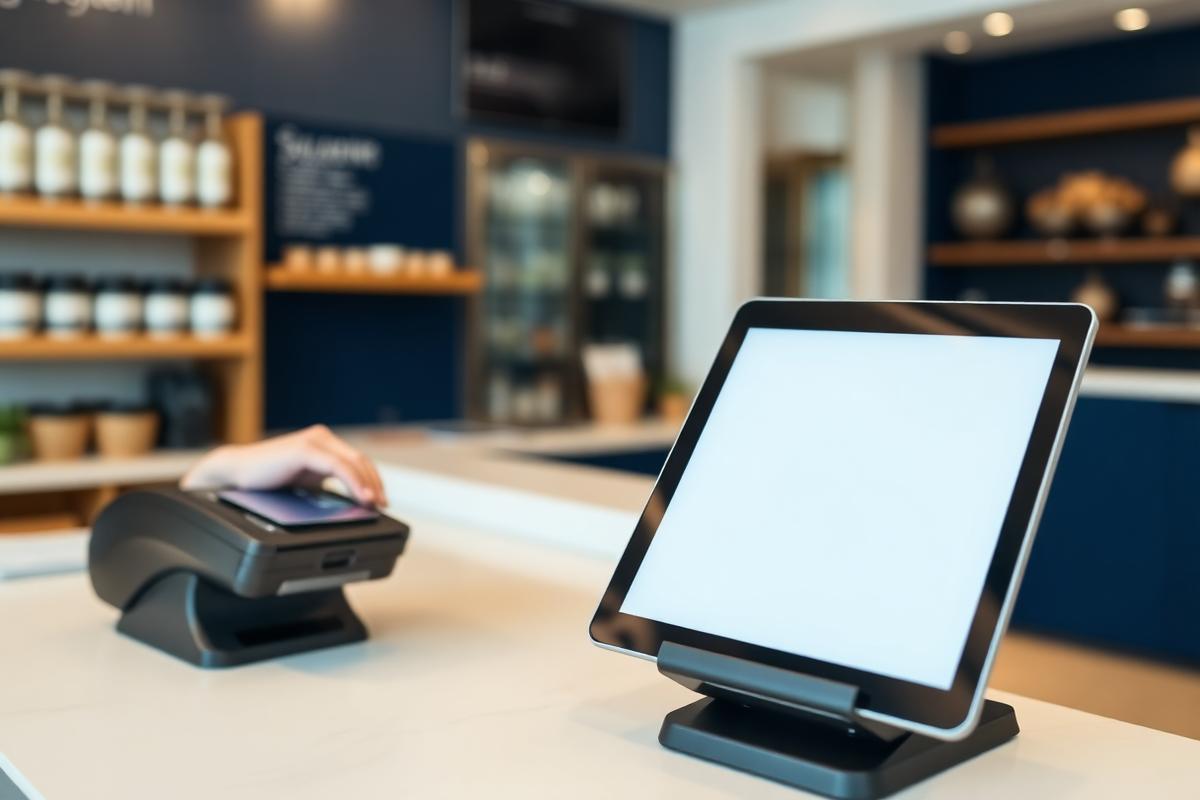
As of 13 August 2026, EET 2.0 (electronic records of sales) is not yet effective law. The Poslanecká sněmovna (Chamber of Deputies) approved the draft bill on 15 July 2026 and forwarded it to the Senát (Senate) on 21 July 2026. Below, we summarise what is currently proposed: which sales must be recorded, what data will be transmitted, why receipts will not be mandatory, and what the planned rollout timeline looks like.
Notice: This Is a Draft Bill, Not Yet Effective Law
As of 13 August 2026, EET 2.0 remains in the legislative preparation stage. The Chamber of Deputies approved the proposal on 15 July 2026 and it was forwarded to the Senate on 21 July 2026. All parameters outlined below reflect the draft bill in its current form and may change before final enactment. Finanční správa (Czech Financial Administration) has stated that further methodological guidance will be released as the legislative process progresses.
Who Will Be Affected by EET 2.0
Under the current proposal, sales recording will primarily target payments received during in-person contact with the customer. Typically, this includes: • Cash, • Card payments, • On-site QR code payments, • Other similar payment methods carried out in person or on business premises. Standard remote bank transfers or invoice settlements without in-person customer contact are not subject to recording. This is a fundamental difference from the misconception that every transaction on a bank account would need to be recorded.
Practical Examples
Hairdresser: • A client visits the salon and pays 800 CZK by card → the sale must be recorded. • A client receives an invoice and pays via online banking transfer → not subject to EET. Accountancy firm: • A client pays an invoice via bank transfer → EET does not apply under the draft bill. • If the firm accepts payments in person at its office (by card or cash), that payment method may fall under EET.
What Data Must Entrepreneurs Record
One of the key changes compared to the original EET system is the significant reduction in data submitted. Under the proposal, the following will NOT be recorded: • Specific goods sold, • Individual line items, • Customer identity, • Detailed purchase breakdown. The required data will mainly consist of: transaction amount + location + timestamp + identification details of the business and transaction. The precise technical scope will be determined by the final wording of the law and technical specifications.
No Mandatory Paper Receipt
This is one of the most substantial changes. Under the current proposal, EET 2.0 does not introduce any obligation to print receipts. Businesses will not need to purchase a printer solely for EET or automatically hand out paper receipts simply because a sale was recorded. Other statutory obligations regarding accounting, tax records, and standard invoicing remain fully in force.
How EET Will Work Technically
The new system is designed to operate exclusively in an online mode. Finanční správa plans to use the MOJE daně portal (specifically the DIS+ tax information box), and a free MOJE EET app will be made available for small businesses. There is no need to purchase expensive point-of-sale (POS) hardware – businesses can use a mobile phone, tablet, computer, POS software, or other compatible solutions. For larger operations, integrating EET directly into existing POS or accounting software will likely be more practical.
What to Sort Out Before Launch
1. Check whether you receive recordable sales – the key factor is not issuing invoices, but the payment method and context. 2. Choose a technical solution – sole traders may use the free state app, while larger companies can use their own POS systems. 3. Set up system access – EET 2.0 features in DIS+ are scheduled to launch on 1 November 2026, including certificate generation. 4. Obtain a digital certificate for sales recording for systems requiring one. 5. Configure your POS software and verify compatibility – technical documentation was published in June 2026.
Rollout Schedule by the Financial Administration
According to the current schedule (as of 13 August 2026, with the bill currently before the Senate):
| Date | Milestone |
|---|---|
| 1 July 2026 | Test environment (Playground) available for developers |
| 1 November 2026 | EET 2.0 features in DIS+, digital certificate generation |
| 1 December 2026 | Launch of the free MOJE EET mobile/web app |
| 1 January 2027 | Planned start of standard operations / pilot phase |
| 1 February 2027 | Planned full live launch |
Exemption: The EET OFF Regime
Under the draft bill, this exemption applies to entrepreneurs in Band 1 of the flat-rate tax regime (paušální režim) with annual turnover up to 1,000,000 CZK who opt out of EET. The proposed condition is paying a monthly flat tax of 1,500 CZK alongside mandatory social security and health insurance contributions. Please note that this is based on the current draft bill and the legislative process is ongoing.
What Will NOT Fall Under EET
Under the current proposal, not every commercial transaction is recorded:
| Scenario | Subject to EET under proposal |
|---|---|
| Invoice → Bank transfer without in-person contact | No |
| Invoice → Customer pays cash at the premises | Yes |
| Retail shop sale → Card payment | Yes |
| E-shop → Customer pays in advance via standard bank transfer | No |
What We Recommend Doing Now
There is no need to buy new POS equipment immediately. A more sensible approach is to: • Map out all payment methods your business accepts, • Categorise them into cash / card / on-site QR / bank transfer, • Identify which ones will fall under recording once the law is finalised, • Check whether your accounting or POS software will support EET 2.0, • Monitor official methodological guidelines from Finanční správa, • Ensure your access to DIS+ is set up, • Test the system prior to the full live launch.
Frequently Asked Questions About EET 2.0 (1–10)
1. Will EET 2.0 be mandatory from 1 January 2027? Under the current draft, yes; Finanční správa plans to launch operations on 1 January 2027. However, it is not a binding legal obligation until the legislative process concludes. 2. Must every business use EET? No. The decisive factor is the payment method – the draft targets in-person payments made face-to-face or on business premises. 3. Do I record payments made by bank transfer? Under the draft bill, no, provided it is a remote transfer without in-person contact. 4. What if a customer pays an invoice in cash? An in-person cash payment falls under EET according to the draft proposal. 5. Will card payments be recorded? Yes, if the card payment occurs in person. 6. Will QR code payments be recorded? They can be, if completed as an in-person, on-site payment. Using a QR code itself is not the deciding factor. 7. Will I have to print receipts? No, the draft bill does not introduce any mandatory receipt printing. 8. Must I buy a new cash register for EET? Not necessarily. Various technical setups can be used, and micro-businesses will have access to the free MOJE EET app. 9. What data will EET send to the tax office? Only minimal sales data – no details on individual products, customer identity, or shopping basket items. 10. Will I enter VAT for every transaction in EET? Under the current proposal, VAT amounts are not to be submitted through EET.
Frequently Asked Questions About EET 2.0 (11–20)
11. Do I need to worry about EET if I only issue invoices? If invoices are paid via standard remote bank transfer, EET will not apply to you for these payments. 12. What if I work from home and a customer pays me cash? The business address itself is not decisive – cash handed over in person may constitute a recordable in-person payment. 13. Will I need an internet connection? Yes, EET 2.0 is designed exclusively as an online system. 14. How do I log in to EET? Via the DIS+ environment on the MOJE daně portal; features and certificate generation are scheduled for 1 November 2026. 15. What is MOJE EET? A planned free web/mobile application by Finanční správa for micro-businesses, scheduled for release on 1 December 2026. 16. Is there any way to opt out of EET completely? Yes, the draft includes an 'EET OFF' regime for entrepreneurs in Band 1 of the flat-rate scheme with turnover up to 1,000,000 CZK who meet the statutory criteria. 17. Do I need to implement EET right now? Not as an active legal obligation. As of 13 August 2026, the draft is in the Senate, but it is wise to prepare an overview of your payment methods. 18. When should I start preparing? If you accept cash, cards, or other in-person payments, preparing now is advisable – the developer test environment has been active since 1 July 2026. 19. Will EET change anything in my bookkeeping? No, recording sales is a separate statutory requirement and does not replace accounting or tax records. 20. Is EET 2.0 definitely approved? No. As of 13 August 2026, the bill is undergoing the legislative process in the Senate and details may still change.
How Corrections and Cancellations (Stornos) Work in EET 2.0
If incorrect sales data is transmitted, an adjustment can be made to the previously recorded sale. The taxpayer follows a similar procedure to standard recording, with the difference that the transaction is submitted with a negative value (a minus entry). This method also applies to returned goods requiring a sales cancellation, processing warranty claims, mistakenly recorded sales, or cases where a cashless transaction was recorded but failed to settle (e.g. if the entrepreneur later discovers funds were not credited). From a technical standpoint, the correction or cancellation is not linked to the original data message; the correction message has its own unique serial number, timestamp, etc., with no direct data link to the original entry.
Rule of Thumb for Business Owners
If you are unsure whether EET 2.0 applies to you, ask yourself three simple questions: 1. Do I accept cash from customers? 2. Do I accept card payments or on-site QR payments in person? 3. Does direct personal contact occur when the payment is made? If the answer is yes, you should start preparing for EET 2.0. We will gladly review which of your sales would be subject to recording – email us at hpfinanc@gmail.com or contact us on WhatsApp at +420 776 239 043.
Sources
Official communications from Finanční správa on EET 2.0, the FAQ section on EET 2.0, and technical preparation documents on financnisprava.cz. Article status: 13 August 2026.
Author: FinTaxo expert team
Operated by: Zaklipso s.r.o.
Czech original: read this article in Czech
This article is general information and does not replace individual tax, accounting or legal advice. Czech legislation changes frequently — verify the current wording or discuss your situation with us before acting on it.
Need help with this in practice?
We go through your situation in a free consultation in English and tell you exactly what has to be registered, filed and paid.
Czech accounting news, once a month
Practical updates on Czech taxes, VAT and payroll — concise and spam-free. Unsubscribe anytime.
By subscribing you consent to the processing of personal data under GDPR and to their use for the marketing purposes of FinTaxo, operated by Zaklipso s.r.o.. You can withdraw your consent at any time. See our privacy policy.